

Investing in Breakthroughs: Second Antisense Therapy Shows Promising Results
Article originally posted on www.als.org/blog/Ulefnersen.
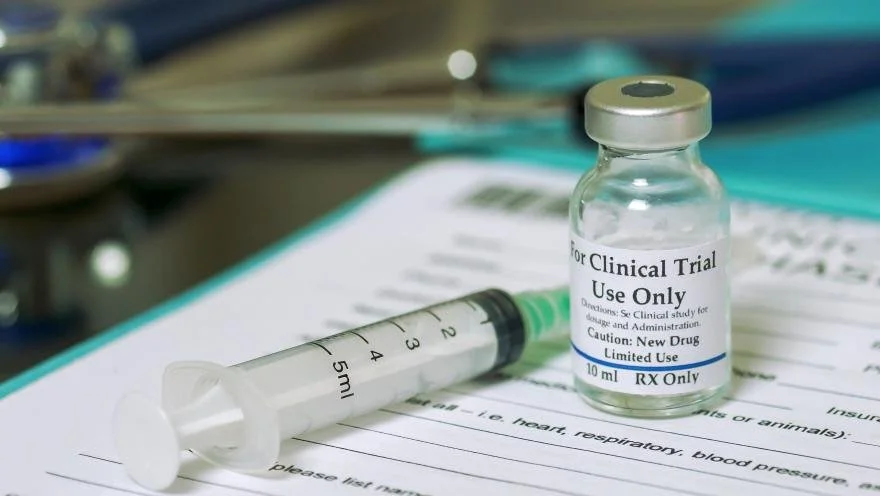
Last week’s announcement that ulefnersen, an investigational antisense therapy for people with a rare form of ALS linked to a mutation in the FUS gene (FUS-ALS), met its primary endpoint in the phase 3 FUSION trial was an exciting and hopeful moment in our efforts to find new treatments and cures.
The drug’s developers, Otsuka and Ionis, reported that ulefnersen significantly improved a combined measure of function and survival compared to placebo, with supporting results on key secondary measures and a favorable safety profile. (Full results have not yet been presented or peer reviewed.)
This makes ulefnersen the second antisense therapy, after Qalsody (tofersen) for SOD1-ALS, to show it can change the course of a genetic form of the disease.
Our Investment in Antisense Technology
More than twenty years ago, we made a bold, early investment in antisense technology, something that had never been tried for neurodegenerative diseases before. That investment led to the approval of Qalsody, the first ALS treatment shown to stabilize disease and even improve function in some people.
Then in 2020, when the early clinical work of ulefnersen ran short of resources, we joined forces with Project ALS to support a pilot clinical research program at Columbia University led by Dr. Neil Shneider. We later supported the expanded access program at Columbia that treated even more people with this rare and aggressive form of ALS, including one participant who regained the ability to walk and breathe on her own.
Those early, targeted investments kept the science alive in the moments when it might otherwise have stalled, and they helped pave the way to the global phase 3 trial and the data now headed to the FDA.
Building on the Promise of Antisense Technology for Sporadic ALS
Antisense treatments are designed to find and attach to a precise genetic sequence. This means that only people with a mutation in the SOD1 gene will benefit from Qalsody, and only people with a mutation in the FUS gene will benefit from ulefnersen, representing less than 3% of people living with ALS.
The challenge now is expanding this progress to the other 97% of the ALS community.
Fueled by recent successes, researchers are leveraging antisense technology to develop treatments targeted at other ALS-linked gene mutations as well as treatments for people with no known gene mutation, also called “sporadic ALS”.
Research into antisense therapy for sporadic ALS generally involves a protein called TDP-43. TDP-43 is a promising target because dysfunctional forms of this protein are found in nearly all people with ALS. It is a much more complicated protein to target than SOD1 or FUS, though, so many researchers are investigating pathways and proteins both “upstream” and “downstream” of TDP-43 to find viable intervention points.
One example is a “downstream” protein called stathmin-2. Stathmin-2 is essential for nerve cells to build, maintain, and repair their connections, but in most people with ALS, including both sporadic and genetic forms of the disease, stathmin-2 levels are reduced because TDP-43 stops doing its job properly. The thought is that antisense therapy could be used to restore normal levels of stathmin-2, which would then help slow or stop neurodegeneration.
An example of this approach is QRL-201. According to interim results released earlier this year, QRL-201 successfully increased stathmin-2 levels in a phase 1/2 trial and showed an “encouraging trend” in slowing progression in participants with sporadic ALS. Because this was an early-stage trial designed to assess safety and tolerability, these results are preliminary and will need to be assessed in a larger trial.
Other researchers are looking to see if antisense therapies that target “upstream” proteins like CHMP7 could potentially prevent TDP-43 from becoming dysfunctional in the first place.
Keeping the Momentum Going
Getting such positive topline phase 3 results for ulefnersen on the heels of the success of Qalsody underscores the potential of antisense therapy in transforming ALS treatment and care. There is still work to be done, but every advance makes the next one more likely and brings us closer to making ALS livable and curing it.